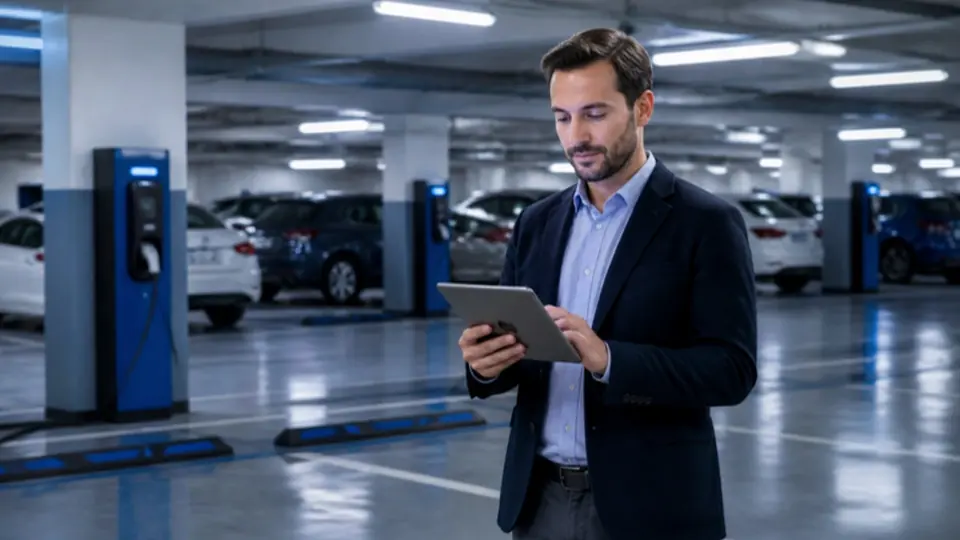
The contract says four patrol visits a night. The patrol sheet says four visits a night, every night, at suspiciously round times. When a car is broken into at 3 a.m., nobody can say whether anyone walked the garage that night.
Why patrol records are hard to trust
Sheets are filled in afterwards
A clipboard on the wall can be signed at the end of a shift for the whole night. There's no difference on paper between a round that happened and one that was only written down.
Photos of checkpoint tags prove nothing
Some buildings use checkpoint stickers that guards photograph. A photo can be taken once and reused, or taken of a printed copy. It shows the sticker exists, not that someone was standing next to it tonight.
Nobody sees the pattern
Even honest sheets are rarely read. Was the garage visited at the same time every night, leaving the same gap for anyone watching? Did the 2 a.m. round quietly stop in winter? On paper, nobody notices.
Clients can't check
Security companies serving several buildings have the same problem in reverse: they know their guards are doing the work, but they can't show the client in a way the client believes.
Checkpoints that check the location
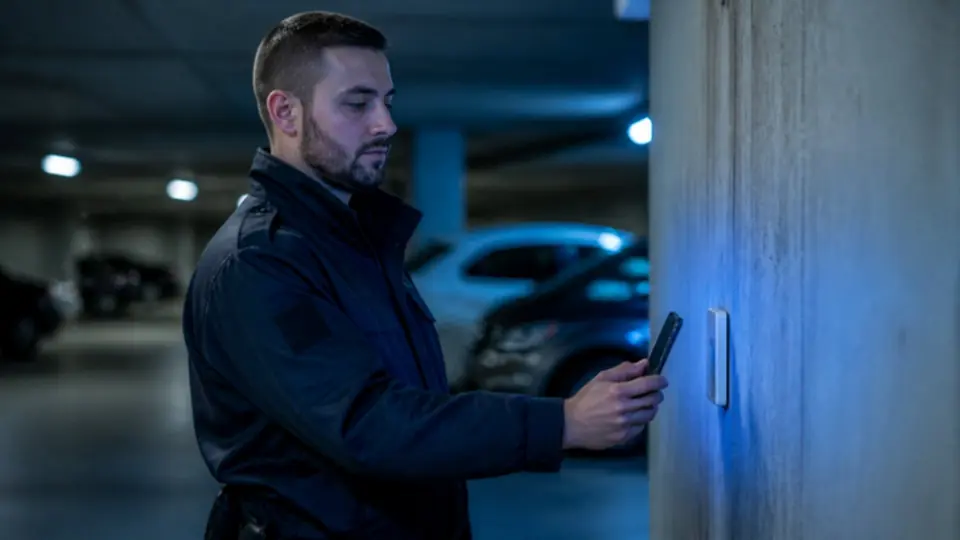
In ParkCommand, each place patrol must visit (main entrance, garage levels, back lot) gets its own QR checkpoint poster. The guard scans it with the patrol app, and the phone's GPS location is compared with where that checkpoint is. A scan from the wrong place, or of a photo of the poster, is flagged.
| Before | With ParkCommand |
|---|---|
| Sheets signed at the end of the shift | Every check time-stamped the moment it happens |
| Photos of tags, reused or copied | QR scan confirmed by the phone's location at that checkpoint |
| No idea how long patrol stayed on site | Arrivals and departures logged automatically when GPS tracking is on |
| Patterns nobody notices | Site-visit reports with a map: how many visits, when, and the gaps between them |
| Clients asked to take it on trust | Reports per building that the client can read for themselves |
Built for the person on patrol
Proof shouldn't mean more paperwork. Patrol accounts open to a simple, app-style home screen on the phone: scan a checkpoint, check a plate, log a violation, end the patrol. Patrol accounts can be set up for a person or for a patrol vehicle shared between guards, and the same person can have different roles at different buildings.
In underground garages without signal, checks are kept on the phone and sent as soon as it reconnects, so nothing is lost and nothing is counted twice.
What the report shows
For each building and date range: every visit with arrival time and how long patrol stayed, which checkpoints were scanned, anything flagged, and a map of where checks happened. It's the answer to "did the patrol happen?" with evidence instead of a signature.